
Why Kitchen Remodel Timelines Matter More Than You Think
A kitchen remodel is one of the most exciting investments you can make in your home. It's also one of the most disruptive. For weeks — sometimes months — your daily routine revolves around takeout containers, a makeshift coffee station in the living room, and the sound of power tools at 8 a.m.
That's why understanding the realistic timeline for a kitchen renovation is so important. When Fort Lauderdale homeowners walk into a remodel with clear expectations, the process feels manageable instead of overwhelming. When they don't, even a perfectly executed project can feel like it's dragging on forever.
So let's break it down — phase by phase — so you know exactly what to expect before, during, and after your kitchen transformation.
Phase 1: Planning and Design (2–4 Weeks)
Every successful kitchen remodel starts long before anyone picks up a hammer. The planning and design phase is where you and your contractor align on the vision, budget, and logistics of the project.
During this phase, you'll typically:
- Discuss your goals, must-haves, and deal-breakers
- Finalize the layout and design direction
- Select materials — cabinets, countertops, backsplash, flooring, fixtures
- Receive a detailed estimate and project scope
- Apply for any necessary permits
This phase often takes two to four weeks, though it can stretch longer if you're making custom selections or if permit approvals take extra time. In Fort Lauderdale, permitting timelines can vary depending on the scope of work and the specific municipality, so it's smart to factor in some buffer.
Pro tip: Don't rush material selections to save time. Choosing the wrong countertop or cabinet style in a hurry leads to regret — and change orders that actually slow the project down later.
Phase 2: Demolition (2–5 Days)
Once permits are in hand and materials are ordered, the real action begins. Demolition is fast, loud, and satisfying — this is when your old kitchen comes apart to make room for the new one.
Depending on the size of your kitchen and the extent of the remodel, demolition typically takes two to five days. During this time, your contractor will remove old cabinets, countertops, flooring, appliances, and sometimes walls.
If your remodel involves changing the layout — moving a sink, adding an island, or opening up a wall — expect demolition to take a bit longer as structural elements are carefully addressed.
Phase 3: Rough-In Work (1–2 Weeks)
This is the behind-the-scenes phase that most people don't think about, but it's critical. Rough-in work includes:
- Electrical wiring for new outlets, lighting, or appliance hookups
- Plumbing adjustments for relocated sinks or dishwashers
- HVAC modifications if needed
- Any structural framing changes
In South Florida, where homes range from mid-century concrete block construction to newer builds, rough-in work can vary significantly. Older Fort Lauderdale homes sometimes reveal surprises behind the walls — outdated wiring, corroded pipes, or moisture damage — that need to be addressed before moving forward.
This phase usually requires inspections before the walls can be closed up, which can add a few days to the schedule.
Phase 4: Installation (2–4 Weeks)
Now comes the part where your new kitchen starts taking shape. Installation is the longest and most detailed phase, and it typically follows a specific order:
- Drywall and painting — Walls are patched, primed, and painted before cabinets go in.
- Cabinet installation — This is the backbone of your kitchen and usually takes several days.
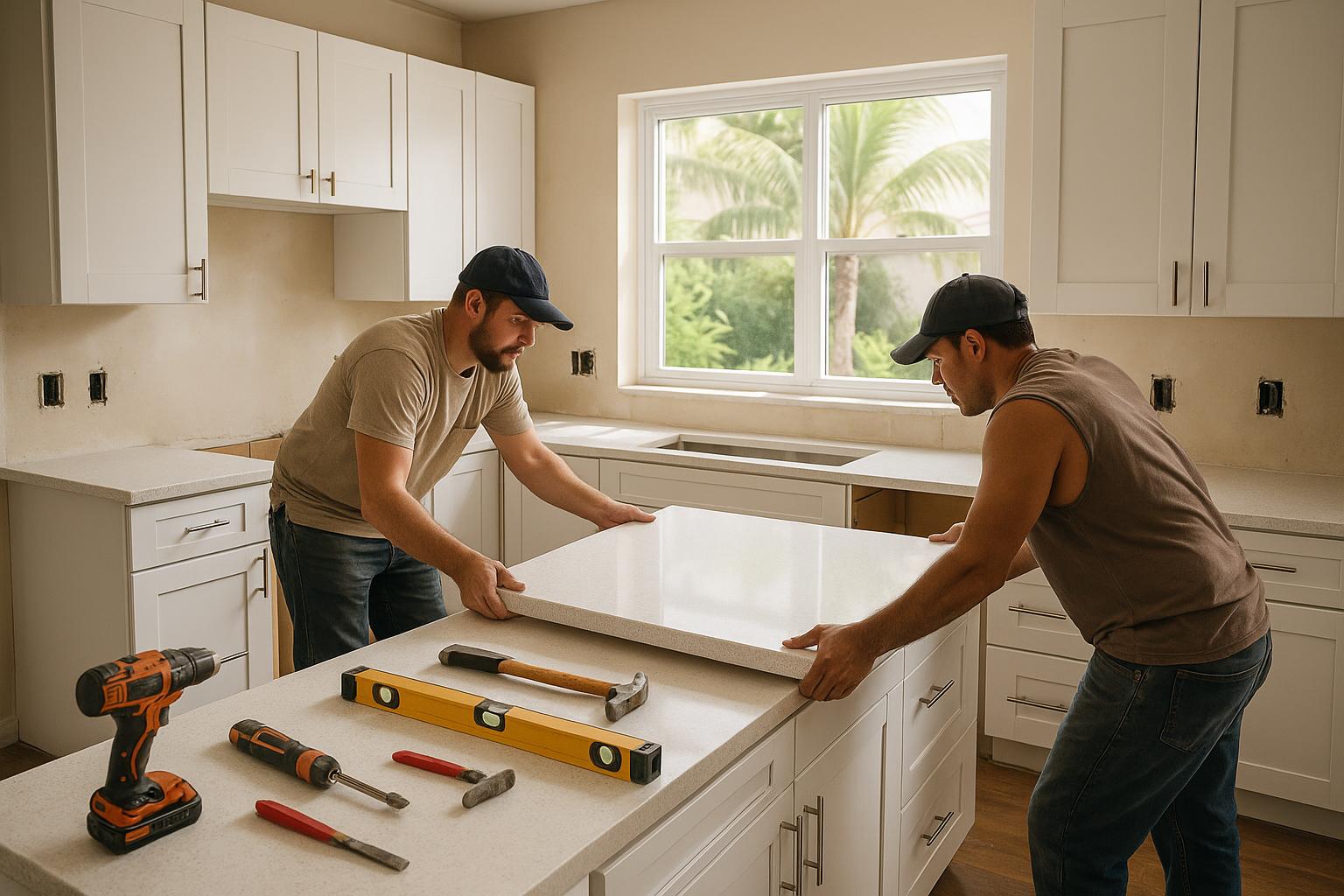
- Countertop templating and installation — After cabinets are set, countertops are measured precisely and fabricated. There's often a one- to two-week lead time between templating and installation.
- Backsplash — Tile or other backsplash materials go in after countertops are secured.
- Flooring — Depending on the material and layout, flooring may be installed before or after cabinets.
- Fixtures and appliances — Sinks, faucets, lighting, and appliances are installed last.
The countertop fabrication wait is one of the most common reasons kitchens seem to stall mid-project. It's not a delay — it's a normal part of the process. A good contractor will communicate this upfront so you're not caught off guard.
Phase 5: Final Details and Punch List (3–5 Days)
The final phase is all about the details. Your contractor will do a thorough walkthrough to identify any touch-ups, adjustments, or minor fixes — this is called the punch list.
Common punch list items include:
- Paint touch-ups around trim and cabinets
- Adjusting cabinet doors and drawer alignment
- Caulking around countertops and backsplash
- Testing all fixtures, outlets, and appliances
- Final cleaning
A reputable remodeling company won't consider the job done until every item on the punch list is resolved and you're completely satisfied.
So How Long Does a Kitchen Remodel Really Take?
For a typical mid-range kitchen remodel in Fort Lauderdale, you're looking at approximately 6 to 12 weeks from demolition to completion. Add in the planning and design phase, and the total timeline from first conversation to cooking your first meal in the new kitchen is usually 8 to 16 weeks.
Here's a quick summary:
- Planning and design: 2–4 weeks
- Demolition: 2–5 days
- Rough-in work: 1–2 weeks
- Installation: 2–4 weeks
- Final details: 3–5 days
Larger or more complex projects — think full gut renovations, custom cabinetry, or structural changes — can extend beyond this range. Smaller updates like a cabinet reface with new countertops may wrap up faster.
What Can Cause Delays?
Even with the best planning, some things can push a timeline back. The most common culprits include:
- Material backorders: Supply chain issues can affect cabinet, countertop, or appliance availability.
- Permit delays: Municipal review times aren't always predictable.
- Hidden damage: Water damage, mold, or outdated systems discovered during demolition.
- Change orders: Changing your mind mid-project on materials or layout adds time and cost.
- Weather: While kitchen work is mostly interior, South Florida's hurricane season can occasionally impact schedules if crews are diverted or supply deliveries are disrupted.
The best way to minimize delays is to work with an experienced local contractor who knows the ins and outs of remodeling in this area — from permitting quirks to the best local suppliers.
How to Set Yourself Up for a Smooth Remodel
A few simple steps can make a big difference in keeping your kitchen remodel on track:
- Make material selections early. The sooner cabinets, countertops, and fixtures are ordered, the sooner they arrive.
- Set up a temporary kitchen. A folding table, microwave, and electric kettle in another room will save your sanity.
- Communicate openly with your contractor. Ask questions, voice concerns, and stay engaged throughout the process.
- Be decisive. Indecision is one of the biggest timeline killers in any remodel.
Ready to Start Planning?
At Talon Exterior Remodeling, we guide Fort Lauderdale homeowners through every phase of the kitchen remodeling process — from initial design to final walkthrough. We believe in transparent timelines, honest communication, and craftsmanship that speaks for itself. If you're thinking about transforming your kitchen, reach out for a free consultation and let's talk about what's possible for your home.